What has been decided?
The Department for Transport published its response to the Euro 7 consultation on 27 October 2026. It says it will lay legislation so that Euro 7 is the minimum emission standard for all new unlimited-volume car and van registrations in Great Britain from 29 November 2027. Manufacturers that register fewer than 2,500 cars or vans a year in GB have until 1 July 2030.
The government had proposed a separate, earlier date of 29 November 2026 for brand-new models. It has dropped that date after manufacturers said it gave too little lead time. Dates for lorries, buses and coaches will be set in a later consultation. The consultation received 67 responses.
The response says the approach will bring Great Britain into line with Northern Ireland and the EU from November 2027.
What does Euro 7 change?
For cars, the exhaust pollution limits are broadly the same as today's Euro 6e standard. The bigger changes are in what is measured and for how long. According to the DfT consultation, Euro 7:
- Limits particles from brakes and tyres, not just from the exhaust. This applies to electric cars too, which are heavier and wear tyres faster.
- Requires emissions to stay controlled for longer, over more of a car's life.
- Adds on-board monitoring, so the car tracks its own exhaust emissions and can warn the driver when an emissions repair may be needed.
- Adds anti-tampering protection for emissions and engine management systems.
- Sets battery durability rules for electric and plug-in hybrid cars, with a standard battery health monitor.
Replacement brakes fitted to Euro 7 cars will not have to meet the new brake-wear limits at first, the government says.
Why used electric car buyers gain the most
Battery health is the biggest unknown when you buy a used electric car. At the moment there is no single standard: some makers show a figure, some show nothing, and dealers use different tests.
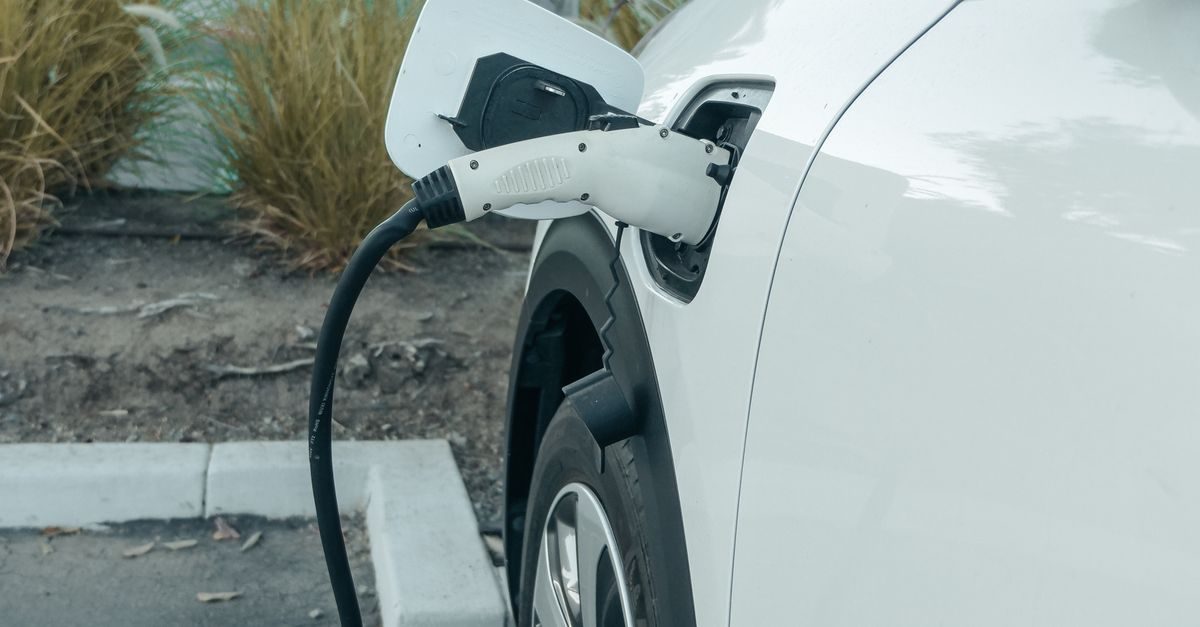
Under Euro 7, a new electric car's battery must keep a minimum share of its original capacity. Industry press reports put the thresholds for cars at 80% after 5 years or 100,000 km (about 62,000 miles) and 72% after 8 years or 160,000 km (about 100,000 miles), with lower figures for vans. The car must also report its battery health in a standard way, which the BVRLA says should be readable on the dashboard or through the diagnostic (OBD) port.
That means a used EV built to Euro 7 should come with comparable battery health data. The catch is timing: the first of these cars will reach the used market from around 2030. For electric cars on sale today, nothing changes yet.
What Euro 7 does not do
- It does not ban Euro 6 cars. It only decides which new cars can be registered from November 2027. Euro 6 cars already on the road are not affected.
- It does not change the MOT. The government response is about approving new vehicles. Some respondents asked for battery checks in the MOT, but the government has not proposed this.
- It does not change clean air zone rules. Charges in zones such as London's ULEZ are set separately. See our clean air zones guide.
What to do if you are buying an electric car now
- Ask for a battery health report before you buy a used EV, and ask how it was measured.
- Check the warranty. Most makers cover the battery for 8 years and a set mileage, with a minimum capacity. Check how much is left.
- Check recalls and MOT history. Run a free MOT history check on any car over three years old, and read about the Volkswagen ID battery recall.
- Work out running costs with our EV charging cost calculator and petrol vs electric guide.
Separately, the government wants to stop owners removing emissions equipment from cars already on the road. Read what the DPF removal proposal says.
Questions drivers ask
When does Euro 7 start in the UK?
Euro 7 will apply to all new car and van registrations in Great Britain from 29 November 2027. Small-volume manufacturers have until 1 July 2030. Dates for lorries and buses will be set later.
Will Euro 7 ban my Euro 6 car?
No. Euro 7 only applies to new cars and vans registered from 29 November 2027. Euro 6 cars can still be driven, bought and sold.
Does Euro 7 change the MOT?
No. The government response is about approving new vehicles and does not change the MOT test.
What does Euro 7 mean for electric cars?
Electric cars must meet battery durability rules and report battery health in a standard way. They must also meet new limits on particles from brakes and tyres.
Sources
- GOV.UK: Updating the minimum emission standard for new road vehicles, government response (27 October 2026)
- GOV.UK: Updating the minimum emission standard for new road vehicles, consultation (April 2026)
- Transport + Energy: Battery health rules introduced as UK Government introduces Euro 7 (27 October 2026)
- Fleet World: UK government confirms Euro 7 rollout from November 2027 (27 October 2026)
Facts checked against the sources above on 27 October 2026. Spotted something out of date? Tell us.