What has been announced
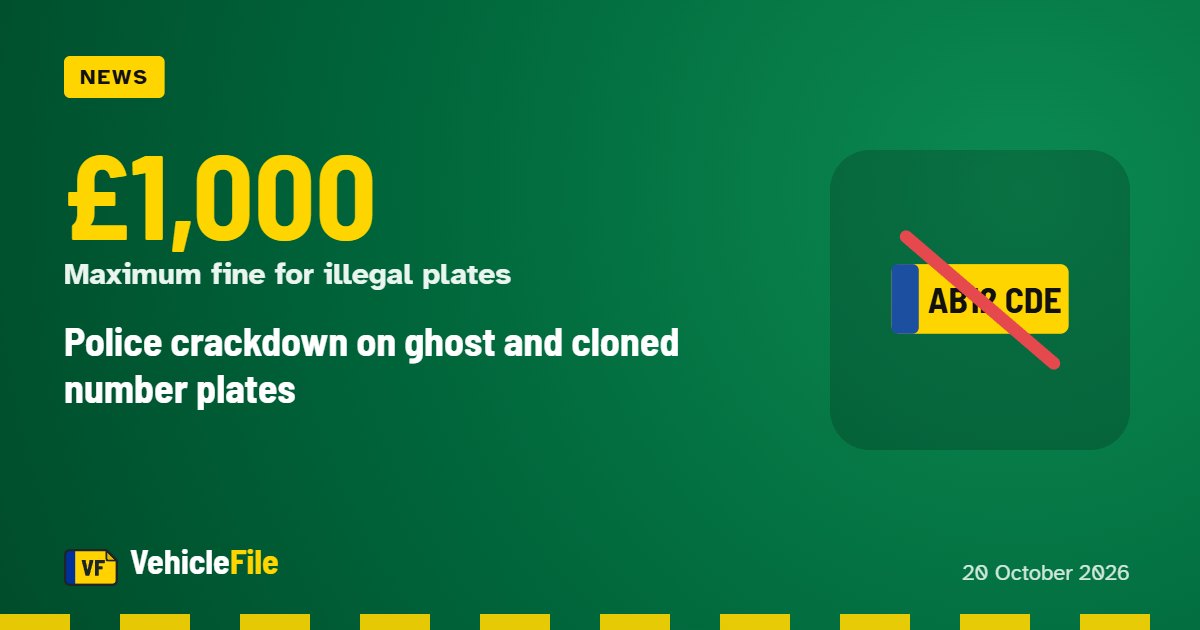
The Department for Transport announced the crackdown on 5 September 2026, and updated the announcement on 20 October. It is led by the new National Roads Policing Coordination Centre (NRPCC), which brings police forces from across England together to share intelligence and data.
It is part of the government's Road Safety Strategy, the first in more than a decade, which has also consulted on tougher penalties for illegal plates and a review of number plate standards.
The three kinds of illegal plate
| Type | What it is |
|---|---|
| Ghost plates | Plates with a transparent film or coating that makes the registration unreadable to cameras. |
| Cloned plates | A registration copied from another, usually similar, vehicle. |
| Missing plates | No number plate displayed at all. |
Illegal plates are used to dodge speed cameras, parking charges, tolls and clean air zone fees, and make stolen or criminal vehicles harder to trace.
New tools for police
Police are trialling new technology, including specialised goggles that can detect plates designed to beat number plate recognition cameras. A multi-force operation led by the NRPCC has already targeted ghost plates.
What it means for honest drivers
- Only buy plates from a registered number plate supplier. They must see proof of your name and address and your right to use the registration, such as the V5C logbook.
- Avoid "show plates" with tinted backgrounds, changed spacing or non-standard fonts. Plates must show the registration in the legal font and layout, or you risk a fine of up to £1,000.
- If you get a fine for somewhere you have never been, your car may have been cloned. Report it to the police and DVLA straight away.
- Buying a used car? Check the plate matches the V5C and the car's MOT history, and look up the age with our number plate age checker.
Sources
Facts checked against the sources above on 20 October 2026. Spotted something out of date? Tell us.